Why the Energy Sector Is an AI Deployment Paradox
Energy and utilities companies sit on some of the richest operational data in the world. Decades of sensor readings from substations, pipelines, wind turbines, and meters. Time-series telemetry from thousands of assets running continuously. Customer consumption patterns at 15-minute granularity. And yet, the majority of that data has never been used to make a single decision.
The paradox is real: the sector that has the most to gain from AI is also the sector most constrained by the conditions that make AI deployment difficult. Critical infrastructure requirements mean you cannot run experiments that risk a substation failure. Regulatory environments mean model decisions must be explainable to a commission. Legacy SCADA systems were not designed to integrate with modern ML pipelines. Union workforces need to understand and trust what the AI is doing.
None of these constraints make AI impossible. They make it harder, and they make the firms that do it well disproportionately competitive. This guide covers what is actually working, what requires caution, and how to structure an enterprise AI program that survives contact with operational reality.
Eight AI Use Cases with Proven Enterprise Returns
These are not vendor case studies. They are use case categories with independently verified deployment outcomes across utilities of varying size and geography.
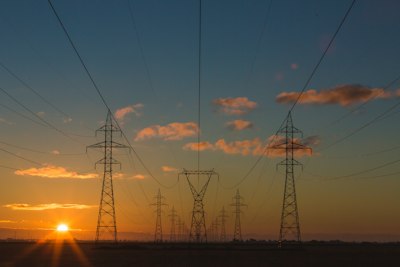
Dissolved gas analysis, thermal imaging, and load history fed into gradient boosting models predict transformer failure 30 to 90 days in advance. Enables planned replacement rather than emergency response.

Vibration sensor data processed with anomaly detection models identifies bearing degradation weeks before catastrophic failure. Best deployed at scale across large wind farms where pattern training data is abundant.

LSTM and transformer architectures applied to weather data, historical load, and economic indicators have reduced mean absolute percentage error by 1.5 to 2.5 points versus traditional statistical models. Compounding value in energy markets.
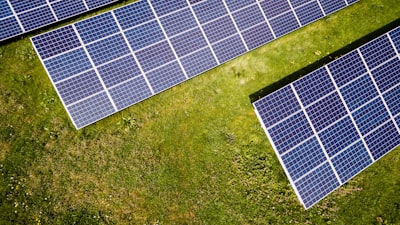
Reinforcement learning applied to voltage regulation and reactive power dispatch reduces distribution losses and defers capital investment in infrastructure upgrades. Particularly valuable in circuits with high solar penetration causing voltage variability.

ML models incorporating soil data, cathodic protection readings, age, and historical ILI inspection results identify high-risk pipeline segments for prioritized inspection. Reduces blanket inspection programs without increasing risk.

AMI data analyzed with anomaly detection and classification models identifies meters with statistical signatures consistent with tampering or meter bypass. Reduces field investigation costs by targeting high-probability cases.

Drone-captured imagery processed through computer vision models identifies pole damage, conductor wear, vegetation encroachment, and hardware corrosion. Dramatically increases inspection coverage with fewer crew-hours.

Personalized energy usage insights and behavioral prompts generated from AMI data. Results vary enormously based on customer segment and regulatory context. Looks better in pilots than at scale.
The Real Barriers to AI Deployment in Utilities
Vendors will tell you the barrier is technology. It is not. The technology for all eight use cases above is mature. The barriers are operational, organizational, and regulatory.
| Barrier | Severity | What Actually Resolves It |
|---|---|---|
| SCADA and OT system integration — Most operational technology was not designed for modern data pipelines. Pulling real-time sensor data into ML infrastructure requires careful architecture. | High | OSIsoft PI or equivalent historian integration; dedicated OT/IT bridge architecture with unidirectional gateways for security compliance |
| Data quality and consistency — Sensor calibration drift, missing data from outages, and inconsistent labeling make training data unreliable. The "clean enough" assumption kills projects. | High | 6 to 12 month data quality remediation before model development begins; automated sensor anomaly detection in the data pipeline |
| Regulatory explainability requirements — NERC CIP, state PUC requirements, and pipeline safety regulations require that automated decisions can be explained and audited. | High | Explainable AI techniques (SHAP values, LIME); human-in-the-loop for consequential decisions; regulatory pre-engagement before deployment |
| Union workforce change management — AI-assisted maintenance scheduling and inspection prioritization directly affects union roles. Deployment without workforce engagement creates resistance. | Medium | Early union involvement in use case design; AI framed as decision support not replacement; job impact analysis shared transparently |
| Procurement and vendor lock-in — Major OEM vendors bundle AI features into equipment contracts. Utilities risk proprietary data formats that prevent switching. | Medium | Open data format requirements in all new equipment contracts; avoid vendors who cannot provide raw sensor data access |
| Cybersecurity requirements — Any ML system connected to operational technology must meet NERC CIP or equivalent standards. This limits connectivity options and slows deployment. | High | Separate OT and IT environments; air-gapped architectures for critical systems; edge ML inference to minimize data transfer from OT networks |
The Data Architecture That Makes Energy AI Work
Most utility AI failures trace back to one problem: teams built models before they built data infrastructure. The model is the last 10 percent of the effort. The first 90 percent is getting reliable, consistent, labeled data from operational systems into a place where it can be used.
The architecture that works in utilities follows a layered approach. At the operational technology layer, SCADA systems, EMS, DMS, and historians collect raw telemetry. A data integration layer — typically using OSIsoft PI or a modern alternative — normalizes this into a consistent time-series format. A feature engineering layer applies domain-specific transformations: calculating dissolved gas ratios, normalizing load data for weather, computing rolling statistics on vibration signatures.
The critical design decision is where to run inference. For non-time-critical applications like weekly maintenance scheduling, cloud-based model serving works. For applications where latency matters — fault detection, voltage control — edge inference on industrial hardware in the substation or at the turbine is the only viable option. This also addresses the cybersecurity concern: if models run at the edge, you are not transmitting raw OT data across network boundaries.
One pattern that consistently works: a digital twin approach where AI models run against a real-time simulation of the grid state rather than directly against operational systems. This provides a safety buffer — the model's recommendations pass through the digital twin before any action is taken — while still enabling real-time responsiveness. This approach also satisfies explainability requirements because the digital twin state at the time of any decision is fully logged.
ROI Framework: What Returns Are Realistic
The following ROI ranges are derived from utility AI deployments across distribution, transmission, and generation segments. These are conservative estimates based on independent verification, not vendor claims.
Utilities that deploy AI in isolation — one use case, no data infrastructure investment — see mediocre returns and abandon the program. Those that treat data infrastructure as a capital investment separate from AI deployment consistently hit the high end of the ROI ranges above. The infrastructure pays dividends across every subsequent use case.
AI and the Energy Transition: Where It Matters Most
Distributed energy resources, EV charging load, and utility-scale battery storage have fundamentally changed the operational challenge for utilities. The grid was designed for one-way power flow from large central generation to customers. The energy transition is making it bidirectional, variable, and far more complex to manage.
This is where AI moves from "efficiency improvement" to "operationally essential." Grid operators managing 40 percent renewable penetration cannot do so with traditional rule-based dispatch and static operating procedures. The variability and interdependency are beyond human cognitive capacity to optimize in real time.
Specific AI applications for the energy transition that are proving out at scale include distributed energy resource management systems using ML for aggregation and dispatch, battery storage optimization using reinforcement learning to maximize arbitrage and ancillary service revenue, EV charging load forecasting and demand response coordination, and solar and wind generation forecasting at the plant and portfolio level.
For more on the data foundation required, see our analysis of why AI programs are only as good as their data — a reality that hits particularly hard in the energy sector where OT data quality has been neglected for decades.
Navigating the Regulatory Environment
NERC CIP standards for bulk electric system cybersecurity impose strict controls on any software connected to systems that affect the reliable operation of the grid. Any AI system that can issue commands or recommendations to operational technology must be assessed against these standards. The compliance pathway is not impossible, but it requires early engagement with your cybersecurity and compliance teams, not an afterthought.
For natural gas pipeline operators, PHMSA regulations govern integrity management programs. The use of ML-based risk models to prioritize inspection intervals is permissible but must be documented and defensible. Several operators have successfully filed risk-based inspection programs using ML models with PHMSA, but the documentation requirements are substantial.
State public utility commission oversight adds another layer. Any AI system that affects rates, service quality, or outage response may be subject to commission review. The safest approach: brief your regulatory affairs team before deployment, not after. Commissions respond poorly to discovering AI-driven decisions affecting customers that were not disclosed.
For governance frameworks that can navigate these requirements, our AI Governance service covers utility-specific regulatory compliance architecture. See also our overview of building governance frameworks that enable rather than restrict AI deployment.
Practical Deployment Roadmap
Based on deployment experience across utilities ranging from municipal cooperatives to investor-owned utilities with 10 million customers, the following phased approach consistently produces the best outcomes.
| Phase | Duration | Focus | Investment Level |
|---|---|---|---|
| 01 | 6 months | Data infrastructure and quality remediation. Historian integration, sensor data audit, labeling of historical failure events, data governance policy. Do not skip this phase. | $500K to $2M |
| 02 | 6 months | Single high-ROI use case pilot. Transformer predictive maintenance or demand forecasting improvement. Real production deployment, not a proof of concept in a sandbox. | $800K to $1.5M |
| 03 | 12 months | Scale and expand. Roll pilot use case to full fleet. Add second and third use case. Build MLOps infrastructure for model monitoring and retraining. | $2M to $5M |
| 04 | Ongoing | AI Center of Excellence. Internalize capability for model development, OT integration, and regulatory engagement. Reduce dependency on external vendors. | $1.5M to $3M annually |
The most common mistake in this roadmap is compressing Phase 1. Teams underestimate how bad their data quality is until they actually try to train a model. Six months of data remediation that feels frustrating in the moment saves 18 months of failed model development later. See our guide on managing organizational change through AI deployment for the human side of this process.
Selecting AI Vendors for Utilities
The utility AI vendor landscape ranges from large industrial conglomerates (GE, Siemens, ABB) that bundle AI into equipment contracts, to specialized startups focused on single use cases like demand forecasting or drone inspection analysis, to horizontal AI platform providers.
The risks are different for each. Large OEM vendors deliver integration but create proprietary lock-in. Startups offer specialization but carry execution and financial risk. Horizontal platforms require significant customization investment and domain expertise you may not have in-house.
The vendor selection criteria that matter most in utilities differ from other industries. Explainability is not a feature — it is a requirement. If a vendor cannot show you exactly why their model issued a particular alert or recommendation, it will not survive regulatory scrutiny. OT integration experience is equally non-negotiable: a vendor that has never integrated with SCADA, PI historians, or industrial edge hardware will cost you 6 to 12 months of integration work that should have been in their product.
For a structured approach to vendor evaluation, our AI Vendor Selection service covers utilities-specific scoring criteria and contract protection strategies including data portability requirements and performance guarantees.
What Separates Utilities That Succeed
The utilities making the most progress on AI share three characteristics that are not about technology. First, they appointed an executive sponsor who owns AI outcomes as an operational responsibility, not an IT project. Second, they invested in data infrastructure before model development — making the boring, unglamorous work of sensor calibration and data labeling a capital priority. Third, they engaged regulators and workforce early, treating AI as a change management challenge as much as a technical one.
The utilities that have stalled invested in vendor pilots, built impressive dashboards, and generated impressive proof of concept results that never made it to production because the underlying data, integration, and organizational conditions were not in place. The technology was fine. Everything around it was not ready.
If your utility is starting this journey, the single most valuable first step is an honest assessment of your data infrastructure quality — not your AI ambition. The ambition is universal in the sector. The data quality differentiates who succeeds. For more context on that foundational challenge, see our deeper analysis at what AI vendors will not tell you about implementation.
Ready to build a utility AI program that delivers?
Our advisors have worked across distribution, transmission, generation, and gas utility segments. Get a candid assessment of where your program stands and what it takes to succeed.
The AI Advisory Insider
Weekly intelligence on enterprise AI deployment, vendor landscape, and implementation strategy. No vendor marketing. No hype.